

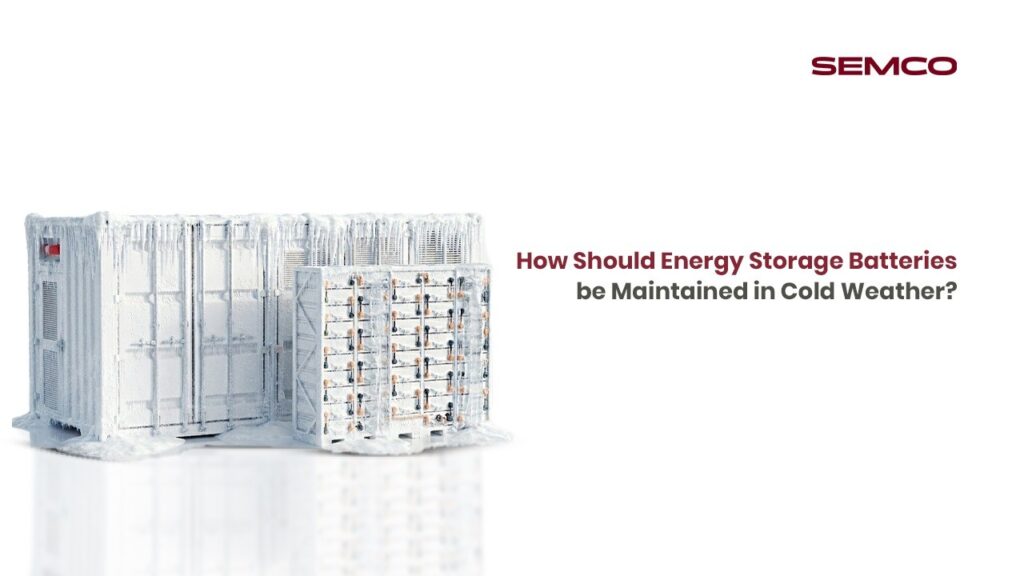
Low temperatures are a “performance killer” for energy storage batteries, directly leading to capacity decay, decreased charge and discharge efficiency, accelerated aging, and potential safety hazards. Proper winter maintenance is crucial for ensuring stable operation and extending the lifespan of equipment. The core principles revolve around temperature control and power preservation, scientific charging and discharging, and meticulous inspections, taking into account both residential and commercial energy storage needs.
Specific operational points are as follows.
Temperature control is crucial for winter maintenance. The optimal operating temperature for energy storage batteries is 20℃-25℃. In low-temperature environments, the operating temperature should be stabilized above 5℃ to prevent irreversible damage. For residential energy storage installed on balconies, in garages, or similar areas, insulation or insulated boxes (with ventilation openings to prevent heat buildup) should be installed, and unobstructed north-facing areas should be avoided. Devices with built-in low-temperature preheating functions should be kept powered on until the temperature rises above 5℃ before charging or discharging.

For commercial and industrial energy storage battery cabinets, the operating status of temperature control systems such as air conditioners and heating elements should be checked, a minimum operating threshold of 5℃ should be set, and filters and air vents should be cleaned regularly. Outdoor cabinets should have any sealing gaps repaired, and the heating cables should be confirmed to be functioning properly. High-current charging is strictly prohibited when the battery temperature is below 0℃ to prevent lithium dendrite formation, which could cause short circuits and shorten battery life.
Low temperatures alter battery electrochemical characteristics, necessitating a “shallow charge, shallow discharge; slow charge, slow discharge” principle during charging and discharging. Prioritize slow charging to reduce current and extend charging time. Preheating can be initiated before charging during off-peak hours.

For residential energy storage, set the charging limit to 80%-90% to avoid full-charge storage (self-discharge accelerates at low temperatures, increasing the risk of bulging). Reduce the discharge rate to avoid high power discharge (e.g., multiple high-power devices operating simultaneously in residential settings).
The minimum discharge limit for residential energy storage should be no less than 20%, and for industrial and commercial applications, no less than 15%. Recharge promptly after discharging and avoid prolonged exposure to low temperatures at low charge levels. When the device is idle, maintain a 50%-60% half-charge state and keep it powered on for short periods. For long-term idle periods, conduct a monthly inspection, replenishing the charge to 50%-60% and checking temperature and pressure for normal operation.

Components, wiring, and the BMS system are prone to failure at low temperatures, requiring increased inspection frequency: once a week for residential use and daily for industrial and commercial use.
During inspections, first check the battery itself for bulging, leakage, or cracking (the casing is brittle at low temperatures; any damage requires immediate discontinuation). Check the balance between individual cell voltage and total voltage; if the difference exceeds 0.05V, contact a professional for equalization. Next, check the wiring and components, inspecting for loose or oxidized connectors (metals shrink easily at low temperatures, poor contact can cause overheating). Check fuses and other components for burning or unusual noises. Ensure outdoor wiring is protected against freezing and bending.
Then, confirm the accuracy of BMS system data (temperature, pressure, current, SOC). If alarms occur, promptly investigate to ensure protection functions are functioning correctly; unauthorized shutdowns are strictly prohibited. Finally, check supporting equipment: for residential use, focus on the inverter and PCS operating status; for industrial and commercial use, confirm the cooling and fire suppression systems are functioning correctly, and that fire extinguishers are properly insulated and within their expiration date.

Outdoor energy storage equipment requires optimized installation environment. If conditions permit, it should be moved indoors or semi-indoors; if relocation is not possible, a windproof, rainproof, and insulated shed should be erected to avoid exposure to rain, snow, and frost. Ensure good ventilation in the installation area and prevent heating equipment from being directly near the batteries (to prevent localized overheating). For industrial and commercial energy storage power stations, ice on the ground must be cleared, and the grounding of the battery cabinet must be checked for secure connection, ensuring that the grounding resistance is ≤4Ω at low temperatures to prevent static electricity buildup.

When batteries malfunction at low temperatures, the principle of “disconnect power first, then troubleshoot, and avoid blind operation” must be followed. If the battery overheats, makes unusual noises, or emits an unusual odor during charging or discharging, immediately disconnect the power and move it away from the equipment. Contact a professional after it has cooled down. If the battery is soaked in rain or snow or covered in frost, disconnect the power first, wipe off the moisture and frost, and check it again after it has dried and warmed up. Charging or discharging in a damp state is strictly prohibited. If the capacity has significantly decreased, preheat the battery before testing. If the performance does not recover, contact the manufacturer for testing.

The core principles of winter maintenance are Three Don’ts:
- Do not charge at high current below 0°C.
- Do not store batteries at low charge levels for extended periods in low temperatures.
- Do not disable the BMS low-temperature protection without authorization.
Three Musts:
- Ensure the operating temperature is ≥5°C.
- Perform shallow charging and discharging.
- and slow charging and discharging; and regularly inspect the battery, wiring, and BMS system.

Following these methods can reduce the impact of low temperatures on battery performance, ensure stable equipment operation, delay aging, and extend battery life.

Contact Semco Infratech to discuss your EV & BESS manufacturing requirements and discover how automatic assembly solutions can enhance your production efficiency, ensure product quality, and accelerate your path to market competitiveness.