

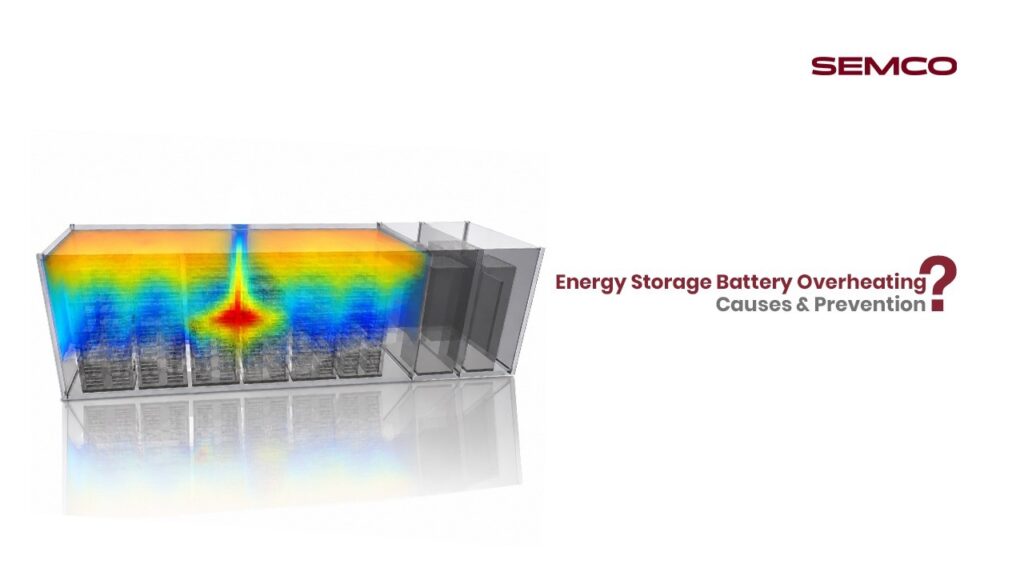
The energy storage battery (we commonly use lithium-ion batteries) loses heat control, which is to say, the battery “produces heat much faster than it dissipates heat,” causing a chain reaction that burns more and more intensely, and when severe, it will catch fire and explode. The reason why this situation occurs is either that the battery itself has a quality problem, or that the use and environment are improper. To prevent it, the whole process must be handled from selecting materials, doing design, production to daily use.

Let’s start with the problem with the battery itself.
First, the material is not enough to “resist heat,” such as some lithium tritium batteries, when the temperature rises to about 200 ° C, it is easy to release oxygen, and the electrolyte in the battery is like gasoline easily burning, and after decomposition, it will also produce heat and flammable gas, which is equivalent to bringing “fuel.

Secondly, there are small defects during production, such as the metal pole inside the battery has small thorns, impurities are mixed in, or the separator film in the middle is broken, which will allow the internal battery to quietly “short circuit” and slowly save heat. Furthermore, the battery will age when used for a long time, like the function of people declines when they get older, and it will generate a thicker and thicker “protection film” inside, and will also grow lithium triads like small branches, which may puncture the isolation film, shorten the battery in an instant and increase the heat. In addition, charging too full (overcharge) will cause the battery’s anode structure to break down, and giving too dry (overcharged) will damage the negative electrode, both of which will trigger a violent heat explosion.

Look at external factors. If the electricity load is too large and the line is faulty, the battery will be discharged with a large current in an instant, and it will become hot in a second. If the battery’s heat dissipation system is broken, or if it is placed in a place of sun and high temperature, the temperature exceeds the safety range, the internal reaction will be faster and faster. The battery is hit and pressured, the structure is destroyed, the positive and negative electrodes are directly touched together, and they will short-circuit immediately; There is also a failure of the charging equipment, which causes excessive charging, too much current, and also makes the battery “unable to bear” and the heat out of control.
Knowing the cause, prevention has the direction, and the core is to protect from the four aspects of “source, production, use, and support”:
First, choose safe materials and a reasonable design.Priority should be given to batteries with strong heat resistance, such as lithium iron phosphate batteries, which will not decompose until more than 500 ° C, and are much safer than lithium tritium batteries. The electrolyte in the battery is replaced with non-flammable, the insulation film is used with high temperature resistant, reducing the risk of fire from the root;Install “air conditioning” a liquid or wind cooling system so that it is always kept at a comfortable temperature of 25-35 ° C, plus insulation and explosion-proof valves so that even if a single battery is heated, it will not spread to other batteries; The battery housing acts as a solid point to prevent collision and squeeze, and avoid internal short circuits.

Second, strict control of production and quality inspection. Miniscule defects such as metal bristles and impurities are minimized during production to ensure that the isolation film is intact; Before each batch of batteries leaves the factory, they must do extreme testing such as excessive charging, short circuit, high temperature shock, to single out all faulty batteries so as not to allow substandard products to enter the market.
Third, standardized use and day-to-day management. Equip your energy storage battery with a “smart steward” – BMS battery management system, which can monitor the battery’s voltage, temperature, remaining power and health in real time, and automatically switch off the power once it detects abnormalities, such as too full charge or too high temperature; Batteries should be placed in a ventilated, cool place, away from heat sources such as heating and gas stoves, and not near flammable materials. Check the battery condition regularly. If you find that some batteries have been used many times and the performance has decreased significantly, replace them in time. Don’t let “bad batteries” affect the entire system.

Fourth, improve safety support facilities. Install special fire protection equipment for the energy storage system, such as gas fire extinguishers and temperature control sprinklers. Once the battery begins to heat, it must be cooled and oxygen blocked to stifle the fire in a budding state. Strictly adhere to the safe use of energy storage batteries, install overload, overheat, and overflow protection devices, and form a comprehensive safety protective net.
Contact Semco Infratech to discuss your EV & BESS manufacturing requirements and discover how automatic assembly solutions can enhance your production efficiency, ensure product quality, and accelerate your path to market competitiveness.