


The relentless expansion of lithium-ion battery applications, particularly in the burgeoning sectors of electric vehicles and large-scale energy storage, has ignited an urgent demand for enhanced battery performance. While advancements in energy density and cycle life are continuously pursued, a primary challenge that has persistently plagued widespread adoption is “mileage anxiety” – the concern over long charging times.
Addressing this bottleneck, alongside other critical issues such as ensuring battery safety (often linked to solid-state battery development), optimizing low-temperature cycle performance (through innovations like low-temperature electrolyte self-heating), and tackling resource sustainability, has become paramount.
Today, riding the wave of breakthroughs in high-power charging, we delve into the core principles and inherent difficulties behind the revolutionary ultra-fast charging technology.
Part I: Core Principles of Fast Charging Technology
At its essence, fast charging technology aims to dramatically shorten the time it takes to replenish a battery’s energy. This is fundamentally achieved by increasing the charging current or voltage, which effectively speeds up the “moving pace” of lithium ions within the battery. Imagine a small truck slowly transporting goods; fast charging is akin to replacing it with a much larger truck, significantly boosting transportation efficiency.
Several sophisticated charging methods contribute to achieving this rapid energy transfer:
- Pulse Charging: This method orchestrates a rhythmic “dance” of energy delivery. It begins with a constant current pre-charging phase, akin to “warming up” the battery. This transitions into a high-current constant current charging stage, allowing lithium ions to swiftly migrate from the positive to the negative electrode. As the battery voltage nears its upper limit, the process intelligently switches to constant voltage charging, ensuring a slow, precise fill-up while meticulously preventing overcharging. Crucially, during the high-current phases, brief “rest” periods are incorporated, allowing the battery to “relax” and alleviate polarization effects, much like an athlete taking short breaks to recover strength during a demanding game.
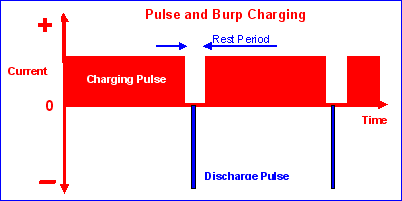
- Reflex Charging (Reflective or Hiccup Charging): This technique operates through a cycle that typically includes three distinct stages: a forward charging pulse, an instantaneous reverse discharge, and a brief stop period. During the forward charging, lithium ions intercalate into the negative electrode. The subsequent reverse instantaneous discharge plays a vital role in effectively reducing the battery’s polarization, akin to giving the battery a “massage” to optimize its readiness for further charge acceptance. However, it’s worth noting that frequent reverse discharges may have a certain cumulative impact on the battery’s overall cycle life.
- Smart Charging: This is a highly “intelligent” charging methodology that employs advanced control technologies, such as dynamic voltage (du/dt) and current (di/dt) monitoring. It continuously tracks the battery’s voltage and current changes in real time, much like a meticulous caretaker constantly attending to the battery’s well-being. Based on this real-time data, the charging current is intelligently adjusted to maintain the charging process within the battery’s optimal acceptable state. This adaptive approach not only facilitates rapid charging but also meticulously protects the battery, thereby extending its service life.
Part II: The Growing Pains of Fast Charging Technology: Bottleneck Analysis
While ultra-fast charging technology offers immense convenience, its widespread adoption has been hindered by several inherent bottlenecks:
- Slow Lithium-Ion Intercalation Kinetics: A primary challenge, particularly for widely used graphite negative electrodes, is the inherently slow kinetics of lithium-ion intercalation. The speed at which lithium ions can smoothly and safely insert themselves into the electrode material dictates the maximum allowable charging current without causing damage or efficiency loss.
- Heat Generation and Safety Issues: During fast charging, the battery operates like a high-speed engine, generating a significant amount of heat. This thermal burden primarily arises from two sources:
- Ohmic Impedance: As current flows through the battery, it encounters electrical resistance within the electrodes, electrolyte, and other components, leading to resistive heating. This is analogous to friction generating heat when current moves through a constricted pipe.
- Entropy Change: During the electrochemical reactions of charging and discharging, the chemical state changes within the battery cause an entropy change, which contributes to reversible heat generation. Excessive heat can degrade battery components, accelerate aging, and, critically, pose significant safety risks, including thermal runaway.
3. Hardware and Infrastructure Limitations: Beyond the intrinsic battery chemistry, significant challenges persist in the realm of hardware facilities and supporting infrastructure. These limitations currently constrain the further development and widespread application of ultra-fast charging technologies.
Part III: Breaking the Bottleneck: The Advent of Megawatt Charging
While many innovators have grappled with the challenges of fast-changing technology, a leading automotive platform has recently made a remarkable debut with its “megawatt flash charging” technology, ushering in a new era for the entire industry.
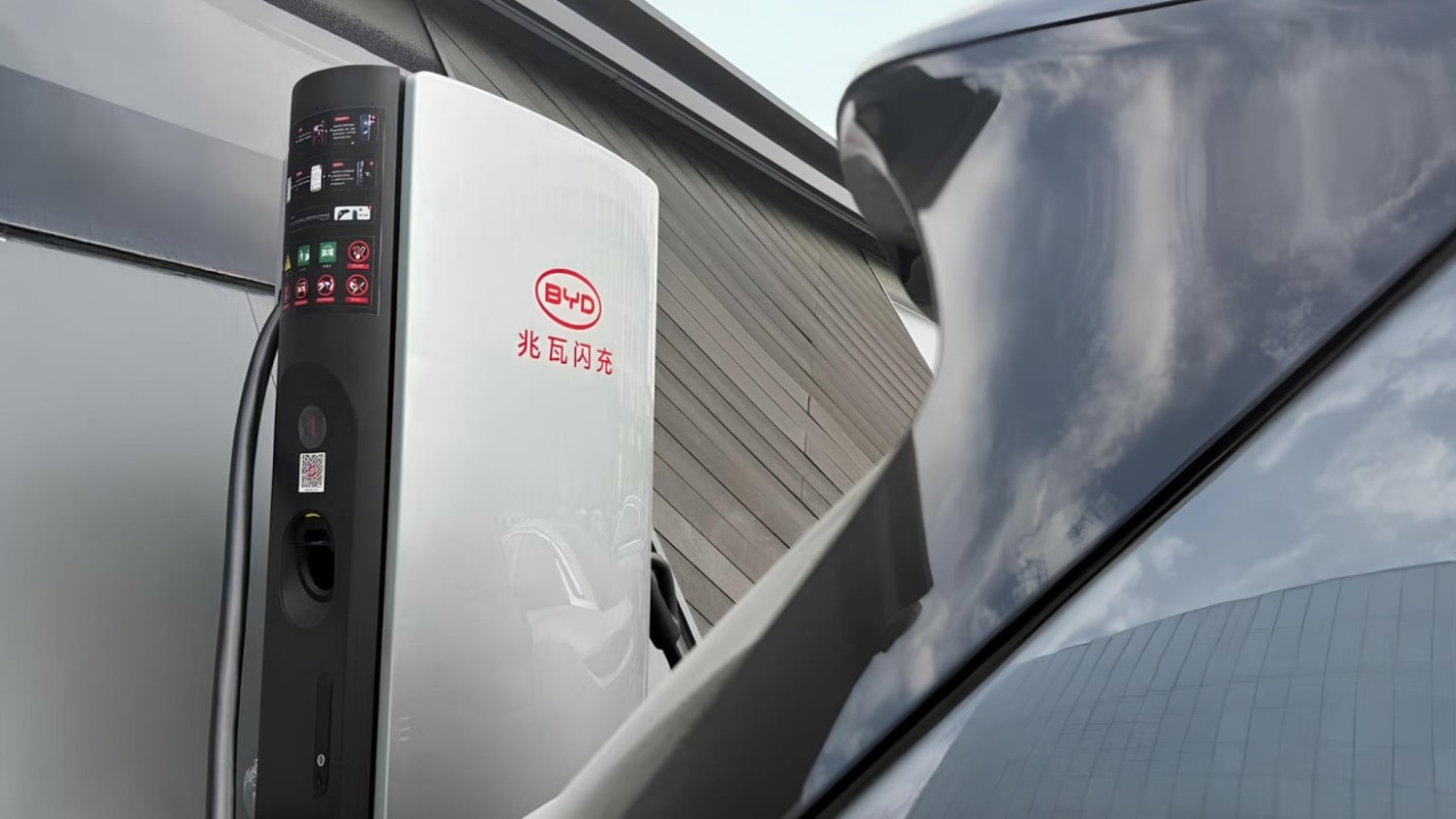
1. Highlights of Technological Breakthroughs
This advanced automotive platform integrates “megawatt flash charging” as a cornerstone feature, representing a convergence of numerous cutting-edge technologies. The platform is notably the world’s first mass-produced passenger vehicle “global kilovolt high-voltage architecture.” Functioning like a powerful “energy hub,” it has elevated the voltage carrying capacity of critical components—including batteries, motors, power supplies, and air conditioning systems—to a “kilovolt level” (e.g., 1000 V), propelling electric vehicles into an unprecedented kilovolt era.
A standout innovation within this system is the “flash charging battery.” This battery is designed like a meticulously optimized high-speed station, where ultra-high-speed ion channels are constructed in all directions, from the positive to the negative electrode. This revolutionary design reduces the internal resistance of the battery by a remarkable 50%. The outcome is staggering: the charging current can reach an astonishing 1000 A, and the charging rate can achieve 10C—both representing industry-leading figures. This is akin to transforming a small station with limited capacity into a large, highly efficient hub where a massive volume of passengers can enter and exit swiftly and smoothly, vastly improving transportation efficiency.
To seamlessly accommodate such ultra-high-power charging, the platform has also pioneered and mass-produced a new generation of automotive-grade silicon carbide power chips. While conventional automotive-grade power chips typically have a maximum voltage withstand capability of around 800 V, this new chip boasts a voltage level of up to 1500 V, making it the industry’s first mass-produced automotive-grade silicon carbide power chip at this voltage level. Acting like a robust “energy valve,” this chip can stably control extremely high voltages and currents, successfully overcoming a significant hurdle in power module design under ultra-high voltage conditions.
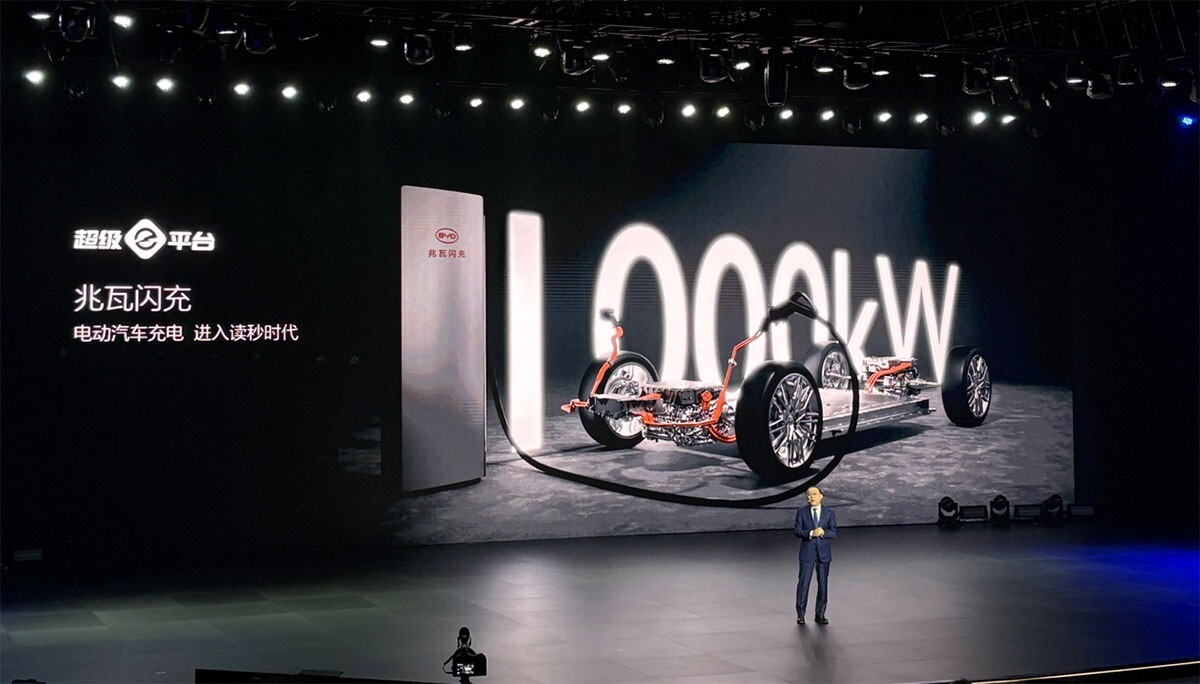
2. Astonishing Actual Performance
The real-world performance of this “megawatt flash charging” technology is nothing short of astonishing. In terms of charging speed, it achieves a peak charging power of 1 megawatt (1000 kW), reaching the world’s highest peak charging speed for mass production. This translates to an incredible “energy for two kilometers in one second, or hundreds of kilometers of endurance in just a few minutes.” This means that in mere moments, vehicles can replenish substantial power, enabling effortless travel.
In actual tests, advanced vehicle models incorporating this technology have showcased remarkable capabilities. For example, a significant percentage of charge could be added in mere seconds, or hundreds of kilometers of range in just a few minutes, with peak charging powers exceeding 1000 kW. Such data powerfully shatters conventional perceptions of charging speed, effectively consigning “charging anxiety” to the past.
Part IV: Supporting Facilities and Strategic Layout
To maximize the efficacy of this “megawatt flash charging” technology, significant efforts have also been directed towards developing robust supporting facilities and a strategic deployment plan.
This includes the development of the world’s first fully liquid-cooled megawatt flash charging terminal system, capable of delivering a maximum output capacity exceeding 1300 kW. This system functions as a powerful “energy gas station,” providing efficient and stable charging services for electric vehicles. Looking ahead, there are ambitious plans to establish thousands of “megawatt flash charging stations” across various regions, building an expansive charging network that will allow users to experience the convenience of fast charging regardless of their location.
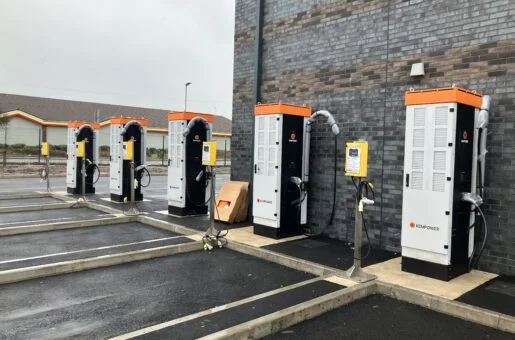
Beyond building its proprietary megawatt flash charging network, the developers have also thoughtfully considered interoperability with existing public charging infrastructure. Innovations like “dual-gun charging” technology can instantaneously transform a standard supercharging pile into a flash charging pile, or a fast-charging pile into a supercharging pile. Furthermore, “intelligent boost” charging technology ensures full compatibility with a wide array of public fast charging piles. This comprehensive approach provides users with a versatile “master key,” enabling fast charging access regardless of the available charging infrastructure, thereby greatly enhancing convenience and versatility.
Future Outlook: The Trajectory of Fast Charging Technology
The ongoing evolution of lithium-ion battery fast charging technology can be likened to an exhilarating scientific and technological marathon. While numerous challenges persist, each breakthrough brings us demonstrably closer to the ambitious dream of seamless electric mobility. The advent of “megawatt flash charging” technology undoubtedly represents a spectacular sprint in this marathon, pushing the boundaries of what is possible.
The continued development of fast charging technology is poised to catalyze the upgrading and advancement of the entire new energy industry. It will stimulate profound technological innovation in interconnected fields such as advanced battery materials, sophisticated charging equipment, and robust power transmission systems, fostering the comprehensive improvement and growth of the new energy industry chain. Concurrently, the widespread adoption of fast charging technology will positively influence the adjustment of global energy structures, lessening reliance on traditional fossil fuels and significantly contributing to the realization of ambitious carbon peak and carbon neutrality goals.