

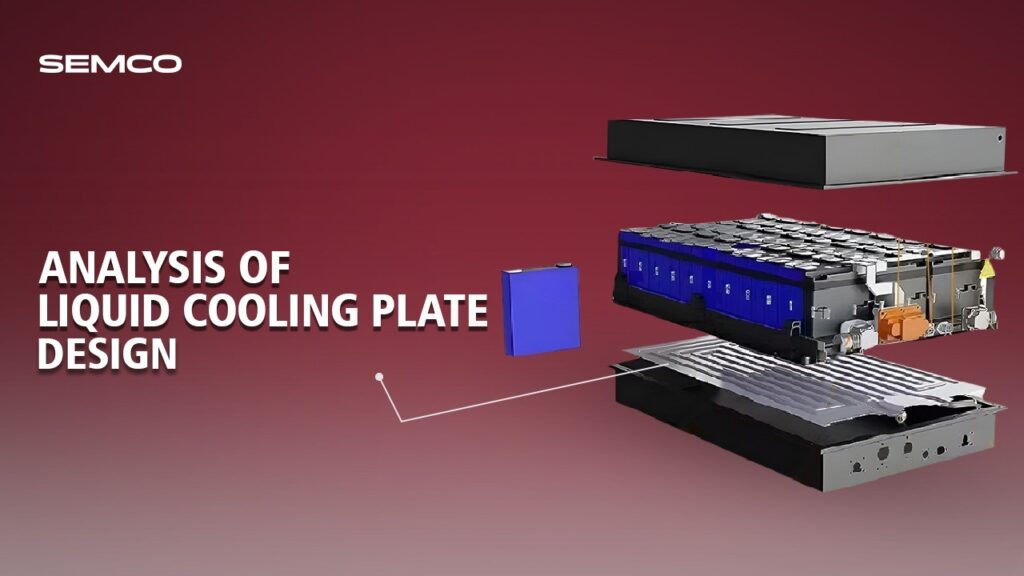
Lithium-ion battery liquid cooling plates are key thermal management components in core equipment such as new energy vehicles and energy storage systems. Their design directly determines the operating temperature stability, cycle life, and safety performance of lithium-ion batteries.
With the improvement of lithium-ion battery energy density (currently, the energy density of mainstream passenger car cells reaches 250-300 Wh/kg) and the popularization of fast charging technology, liquid cooling plates have evolved from conventional aluminum structures to multi-material, high-precision, and high-reliability designs. Stainless steel cold-cooled plates have become one of the trend choices for high-requirement scenarios due to their unique advantages.

Development and Application of New Liquid-Cooled Plate Technology
With the diversification of application scenarios, liquid cooling plate technology is evolving towards “material upgrading, process precision, and functional integration”. In addition to stainless steel, technologies such as 3D printing and composite materials are also gradually being implemented.
Core directions of technological evolution
- Materials breakthrough: Expanding from single aluminum alloys to stainless steel, copper alloys, and composite materials, focusing on improving corrosion resistance and high-temperature stability.
- Process innovation: Laser precision welding, microchannel molding, integrated die casting and other processes enable refined flow channels (width ≤ 4mm) and integrated structures.
- Performance upgrade: heat transfer coefficient exceeds 1200 W/(m² ・ K), pressure resistance is increased to over 3.0MPa, and service life is extended to 15-20 years.

Current Status of Mainstream Emerging Technologies
- 3D printed liquid cooling plates: Using titanium alloy and aluminum alloy powder printing, complex irregular flow channel designs can be achieved, which can be adapted to niche high-end car models or special energy storage equipment, but the cost is high (about 3-5 times that of conventional aluminum plates) and mass production is difficult.
- Composite material cold plate: Made of PP + glass fiber as the base material, with embedded aluminum flow channels, it is 15-20% lighter than aluminum plate, but has poor pressure resistance (≤1.5MPa) and is only suitable for low pressure scenarios.
- Stainless steel cold-rolled sheet: With its advantages of corrosion resistance, high temperature stability and long life, it has become the core choice for commercial vehicles, energy storage systems and high-end passenger vehicles. Its market penetration rate has been increasing year by year, and its application in the energy storage field has reached 35% in 2024.

Core Development and Practical Applications of Stainless Steel Cold- rolled Sheets
The development of stainless steel cold-rolled sheets revolves around “solving the pain points of aluminum sheets and adapting to high-requirement scenarios,” forming a complete system from material selection and process design to product verification.
Development Background and Material Selection
Core requirements: To cope with high corrosion, high temperature (-40 ℃~105 ℃), and long life (15 years or more) scenarios, such as commercial vehicle chassis battery packs, energy storage containers in coastal areas, and fast-charging and battery swapping vehicles.
Material selection: The mainstream material used is 304/316L stainless steel. Because 316L contains molybdenum, its corrosion resistance is more than 50% higher than that of 304. It can withstand chloride ion concentrations of up to 5000ppm, making it suitable for harsh environments. The thickness of the sheet is controlled at 1.0-1.5mm to balance structural strength and lightweight.
Material property comparison:

Key Process Technologies and Design Considerations
- Laser precision welding: Fiber laser welding is used, with a weld width ≤1.2mm, welding strength ≥300MPa, and leakage rate ≤1×10⁻⁷ Pa ・ m³/s, solving the problem of stainless steel welding deformation.
- Optimized flow channel design: A microchannel structure (width 4-6mm, depth 4-5mm) is adopted, and the number of flow channels is increased by 30% compared with conventional aluminum plates. The flow velocity is uniformly distributed through simulation, and the heat transfer coefficient is increased to 1200-1500 W/(m²・ K).
- Lightweight and structural integration: Adopting an integrated design of “flow channel + reinforcing rib”, the weight is controlled at 1.8-2.2kg/ ㎡ while ensuring pressure resistance of 3.0-4.0MPa. It is only 30-50% heavier than aluminum plates, and some of the weight disadvantage is offset by structural optimization.
- Sealing technology: It adopts a double seal of welding + sealing ring. The sealing ring is made of fluororubber with a temperature range of -40 ℃ to 120 ℃ , which is suitable for cold and hot cycle conditions (≥3000 cycles without leakage).

Actual product solutions and performance data
Stainless steel cold-rolled sheet solution for commercial vehicles
- Application scenario: Battery pack for heavy-duty trucks (capacity 280kWh, energy density 240 Wh/kg). Product parameters: Made of 316L stainless steel, plate thickness 1.2mm, flow channel pattern is a combination of serpentine and parallel flow, coverage area 2.5㎡, weight 5.2kg.
- Performance: Under fast charging (1.2C) conditions, the maximum temperature of the battery pack is ≤48 ℃ , and the temperature uniformity error is ≤3%; after 2 years of use in coastal areas, there is no corrosion; the withstand pressure test is 3.5MPa, and there is no leakage after holding the pressure for 30 minutes.

Stainless steel cold plate solution for energy storage containers
- Application scenario: 1GWh energy storage container (cell type: lithium iron phosphate, single module capacity 280Ah).
- Product parameters: 304 stainless steel microchannel cold plate, single piece size 1200×800mm, number of flow channels 24, single piece heat dissipation power up to 5kW.
- Performance: The module temperature can be controlled between 30-42 ℃ at an ambient temperature of 45 ℃ ; it can run continuously for 10,000 hours without failure, with an expected lifespan of ≥18 years; and maintenance costs are reduced by 60% compared to aluminum plates.

Application Scenario Adaptability Analysis
- Commercial vehicles: Suitable for high-frequency use and harsh working conditions such as heavy trucks and buses, solving the problems of aluminum plate corrosion and insufficient lifespan.
- Energy storage systems: especially energy storage projects in coastal and high-temperature areas, meet the requirements of long life and low maintenance.
- High-end passenger vehicles: fast-charging models and luxury models, improving thermal management stability and safety.
Technical Challenges and Optimization Directions
Existing Challenges
- Higher cost: The cost of stainless steel cold-rolled sheet material is 2-2.5 times that of aluminum sheet, and the cost of laser welding process increases by 15-20%.
- Excessive weight: For the same area, stainless steel cold-rolled sheet is 30- 50% heavier than aluminum sheet, which is detrimental to the lightweighting of passenger vehicles.

Optimization Direction
- Material upgrade: Develop ultra-thin stainless steel plates (below 0.8mm) and combine them with high-strength alloy elements to ensure strength while reducing weight.
- Process innovation: The combination of roll forming and laser welding is adopted to reduce the production cycle and reduce costs by 10-15%.
- Integrated design: The cold plate is integrated with the lower protective plate of the battery pack and structural components to offset the weight disadvantage of a separate cold plate.
Lithium-ion battery liquid cooling plates have evolved from conventional aluminum solutions to multi-material, high-precision designs. Stainless steel cold-cooled plates, with their advantages of corrosion resistance, high- temperature stability, and long lifespan, have become a core choice in demanding applications such as commercial vehicles and energy storage systems.
Their development hinges on material selection (304/316L), flow channel optimization (microchannel design), and process breakthroughs (laser precision welding). Through actual product verification, comprehensive improvements in heat exchange efficiency, pressure resistance, and lifespan have been achieved. In the future, with continuous optimization of materials and processes, stainless steel cold-cooled plates will further reduce costs and weight, and their applications will penetrate deeper into the passenger vehicle sector.