

For years, solid-state batteries have captivated the imagination of energy scientists and engineers, hailed as the ultimate solution for a safer, more efficient, and potentially more powerful energy future. Their promise of eliminating flammable liquid electrolytes has long positioned them as the “holy grail” of battery technology. However, a significant hurdle has remained: achieving sufficiently high ionic conductivity within a solid material to rival the rapid ion movement seen in liquid electrolytes. Now, a groundbreaking discovery by a team of dedicated scientists at a prominent research institution may finally propel solid-state batteries from ambitious vision to imminent reality.
This transformative breakthrough centers on the development of a novel solid-state battery material that shatters previous records for lithium-ion conductivity. This revolutionary compound conducts lithium ions at an astonishing rate, demonstrating a conductivity more than 30 percent faster than any previously known solid electrolyte materials. Such a leap in performance is not merely incremental; it represents a significant advancement that could dramatically accelerate the commercial viability of solid-state battery technology.
Unveiling the Record-Breaking Material: A Symphony of Elements
To unlock this unprecedented level of conductivity, the research team embarked on an innovative material design strategy. Their efforts culminated in the creation of a sophisticated new material comprised of lithium, antimony, and scandium. The ingenuity behind this discovery lies in a subtle yet profoundly impactful structural modification. By meticulously replacing a fraction of the lithium atoms within the crystalline lattice of lithium antimonide with scandium atoms, the researchers deliberately introduced minute, strategically placed vacancies within the conductor material’s crystal structure.
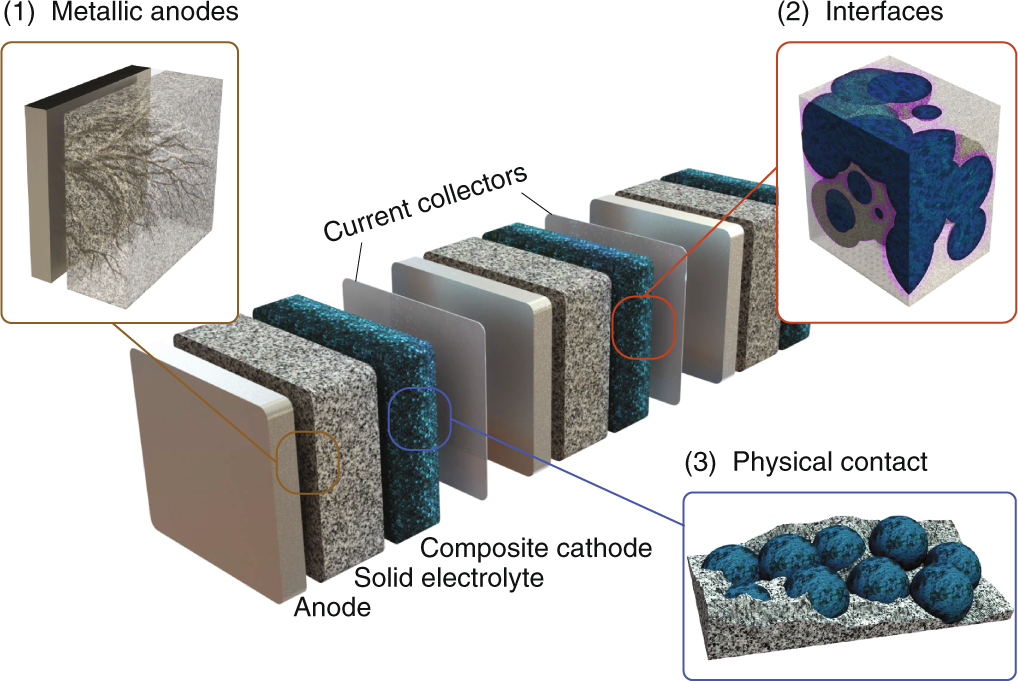
These engineered vacancies are the key to the material’s extraordinary performance. In a solid electrolyte, lithium ions must navigate through a rigid atomic framework. Traditional solid materials often restrict this movement, leading to lower conductivity. However, by creating these tiny, atomic-scale gaps, the researchers effectively built an express highway for lithium ions. These vacancies act as transient “stepping stones” or empty sites that lithium ions can rapidly hop into, facilitating their swift and unimpeded migration through the material. This clever manipulation of the crystal lattice fundamentally optimizes the pathways available for ion transport, resulting in the observed record-breaking conductivity.
Beyond Conductivity: A Suite of Desirable Attributes
The significance of this new material extends far beyond its exceptional ionic conductivity. It boasts a combination of characteristics that are highly desirable for practical battery applications:
- Unrivaled Ionic Conductivity: The sheer speed at which lithium ions move through this material directly translates to faster charging and discharging rates for the batteries. This addresses a critical limitation of many earlier solid electrolyte candidates and brings solid-state batteries closer to meeting the demanding power requirements of modern applications, particularly in electric vehicles.
- Exceptional Thermal Stability: Unlike liquid electrolytes, which are often flammable and can degrade at high temperatures, this new solid material exhibits remarkable thermal stability. This intrinsic property significantly enhances the safety profile of the battery, drastically reducing the risk of thermal runaway, overheating, and potential fire hazards. This stability also contributes to a longer operational lifespan for the battery, as it can withstand broader temperature fluctuations without degrading.
- Manufactured Through Mature Chemical Processes: Crucially, this advanced material can be synthesized using well-established and mature chemical processes. This is a vital factor for scalability and cost-effectiveness. The ability to produce such a high-performance material using existing industrial techniques bypasses the need for entirely new and expensive manufacturing infrastructure, potentially accelerating its transition from laboratory breakthrough to widespread commercial production. This practicality is often the bottleneck for many promising material innovations, and its absence here is a significant advantage.

Paving the Way for the Next Generation of Batteries
This breakthrough has profound implications for the development and adoption of solid-state batteries:
- Enhanced Safety: By replacing volatile liquid electrolytes with a thermally stable solid material, the inherent risk of fire and explosion associated with conventional lithium-ion batteries is dramatically reduced. This is a game-changer for applications where safety is paramount, such as electric vehicles and large-scale grid energy storage.
- Higher Energy Density: Solid electrolytes are compatible with lithium metal anodes, which offer significantly higher theoretical energy densities compared to the graphite anodes used in current lithium-ion batteries. The high conductivity of this new material makes the practical implementation of such high-energy-density configurations more feasible, enabling longer ranges for electric vehicles and more compact energy storage solutions.
- Extended Lifespan: The thermal stability and reduced propensity for undesirable side reactions (which often occur at the liquid-solid interface in conventional batteries) can contribute to a longer cycle life for solid-state batteries made with this material. A longer lifespan translates to greater durability and value for consumers and industrial users.
- Streamlined Manufacturing Potential: The fact that the material can be produced using existing, mature chemical processes suggests a smoother path to mass production. This pragmatic aspect is key to overcoming the manufacturing challenges that have historically slowed the adoption of solid-state battery technology.
While further research and development are always necessary to optimize materials and integrate them into complete battery systems, this recent discovery represents a monumental step forward. It directly tackles one of the most critical challenges facing solid-state battery commercialization – the need for high ionic conductivity – while simultaneously offering inherent advantages in safety and manufacturability. This development strongly suggests that solid-state batteries are no longer a distant dream but are now firmly on the fast track to becoming a tangible reality, poised to revolutionize energy storage across countless applications.