

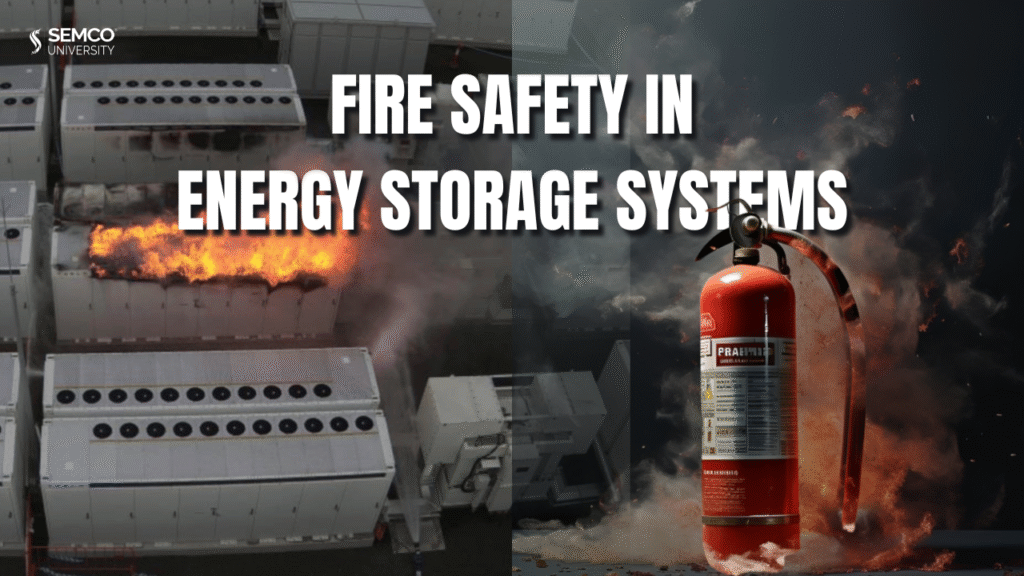
Energy storage systems, particularly those using lithium-ion batteries, are becoming increasingly important in the transition to a clean energy future. However, these systems pose significant fire risks due to factors like thermal runaway, electrical faults, and external factors like physical damage.
Fire Protection Systems for Energy Storage
A robust fire protection system is essential to mitigate these risks. Key components of such a system include:
Fire Detection Systems:
- Smoke detectors
- Temperature sensors
- Gas sensors (e.g., hydrogen, carbon monoxide) These sensors detect early signs of fire and trigger an alarm
Fire Alarm Systems:
- Audible and visual alarms to alert personnel.
Fire Suppression Systems:
- Gas-based systems (e.g., inert gas, FM-200)
- Water mist systems
- Foam systems The choice of system depends on the specific application and fire risks.
Control Systems:
- Monitor the status of the fire protection system.
- Trigger fire alarms and activate fire suppression systems.
Remote Monitoring Systems:
- Allow remote monitoring of the system’s status and fire events.

Fire Protection Strategies
- Cabin-Level Fire Protection:
- A comprehensive system that protects the entire energy storage cabinet.
- Combines fire detection, alarm, and suppression systems.
- Provides a high level of protection but may be more costly.
2. Cluster-Level Fire Protection:
- A more targeted approach that focuses on individual battery clusters.
- Uses sensors to detect fires within specific clusters.
- Allows for localized fire suppression, reducing the risk of damage to the entire system.

Key Considerations for Fire Extinguishing Agents:
- Electrical Non-Conductivity: To prevent electrical short circuits and further damage.
- Effective Fire Suppression: The agent should be able to quickly extinguish fires.
- Minimal Environmental Impact: The agent should be environmentally friendly and have minimal negative effects.
Regulatory Compliance
Energy storage systems must adhere to local and national fire safety codes and standards. These regulations outline specific requirements for fire detection, alarm, and suppression systems. It is crucial to ensure that the design, installation, and maintenance of fire protection systems comply with these standards.
By implementing robust fire protection systems and adhering to safety regulations, we can significantly reduce the risk of fires in energy storage systems and promote the safe and sustainable adoption of these technologies.