

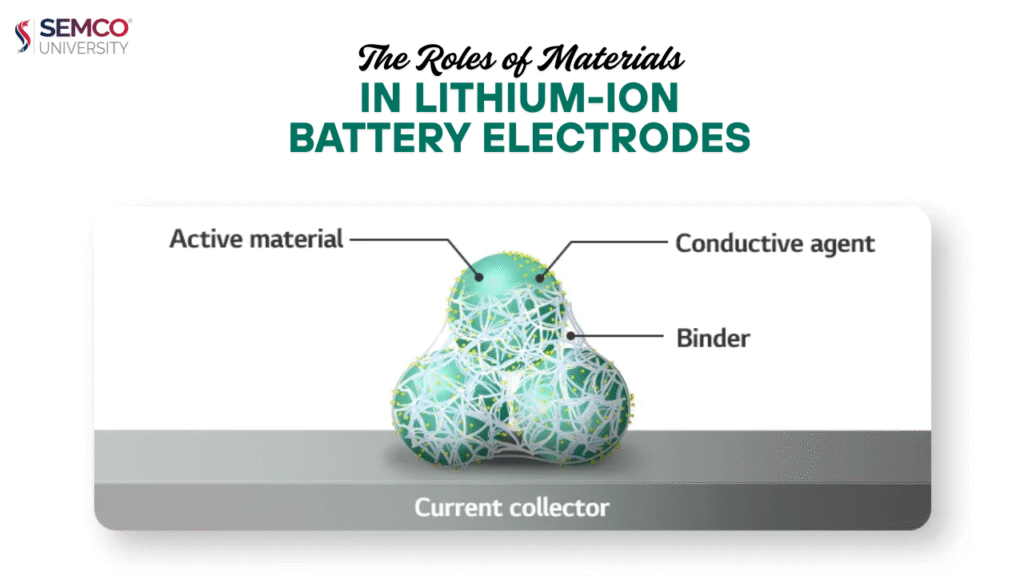
Within the intricate world of lithium-ion batteries, the electrode materials stand as the cornerstone of their performance. These electrodes, the very sites where energy is stored and released, are meticulously crafted from a blend of crucial components: active substances, conductive agents, and binders. Each of these plays an indispensable role, working in harmony to dictate the overall power, longevity, and efficiency of the battery.
1. Active Substances: The Energy Reservoir
At the heart of the electrode lies the active material, the very source of the battery’s energy. This component dictates the battery’s energy density – how much energy it can store – and its charge and discharge voltage. In the positive electrode, common active materials include lithium cobalt oxide, ternary compounds (such as lithium nickel cobalt manganese oxide), and lithium iron phosphate. These materials possess the unique ability to interact with lithium ions during the charge and discharge cycles, enabling the storage and release of electrical energy. During charging, lithium ions migrate from the negative electrode to the positive electrode, where they are absorbed and stored within the positive active material’s structure. Conversely, during discharge, these stored lithium ions are released from the positive electrode, travel back to the negative electrode, and in the process, release the electrical energy we utilize.

The inherent properties of these active materials, such as their purity, the size of their individual particles, and their overall shape, have a direct and significant impact on the battery’s performance and lifespan. High-purity active materials minimize unwanted side reactions within the battery, leading to improved stability over many charge-discharge cycles and enhanced safety. Furthermore, optimizing the particle size and shape of the active material helps to create more efficient pathways for lithium ions to move, thereby improving the battery’s ability to charge and discharge quickly (its rate performance) and its overall capacity.

Researchers continuously explore the impact of active material particle size. Reducing the size to the nanoscale (below 100 nanometers) can shorten the distance lithium ions need to travel, leading to significant improvements in rate performance, allowing for very fast charging and discharging. However, excessively small particles can also lead to a less dense electrode (affecting energy density) and increased unwanted reactions with the electrolyte. Therefore, a careful balance is crucial. For positive electrode materials like NCM811, the particle size is often controlled within the range of 500 nanometers to 5 micrometers, while for negative electrode graphite, a larger size of 10-20 micrometers is typically preferred.
2. Conductive Agents: The Electron Highway
Conductive agents are the unsung heroes within the lithium-ion battery electrode. They act as microscopic bridges, creating a continuous pathway connecting the active material particles to the current collector. This ensures the efficient and unimpeded flow of electrons throughout the electrode. Their primary functions include enhancing the overall electrical conductivity of the electrode material, establishing a robust network for electron transport, reducing the electrical resistance at the points of contact between particles, and facilitating the penetration of the electrolyte into the electrode structure. Common conductive agents include various forms of carbon, such as carbon black, conductive graphite, carbon fibers, and carbon nanotubes. Each of these materials possesses unique physical and chemical characteristics that make them suitable for different battery systems and applications. For instance, carbon black, with its high surface area and ability to pack densely, excels at forming an interconnected conductive network. Carbon nanotubes, with their distinctive one-dimensional, elongated structure, exhibit exceptional electrical conductivity.

The inclusion of conductive agents dramatically improves the electrode’s ability to conduct electricity and reduces the internal polarization of the battery. This, in turn, leads to enhanced charging and discharging efficiency and a longer cycle life. The role of conductive agents becomes particularly critical in high-power lithium-ion batteries, where the ability to handle large currents during rapid charging and discharging is paramount.
3. Binders: The Glue That Holds It All Together
The binder acts as the “glue” within the electrode, a polymer compound that physically adheres the active material particles and the conductive agents to the current collector. It firmly fixes these components together, maintaining the structural integrity of the electrode and the stability of its electrochemical properties. The main roles of the binder include creating a strong bond between the active material, the conductive agent, and the current collector, improving the uniformity of the electrode composition, enhancing the electrode’s wettability by the electrolyte, and facilitating the movement of lithium ions at the interface between the electrode and the electrolyte. Common binders include polyvinylidene fluoride (PVDF) and sodium carboxymethyl cellulose (CMC), each with its own set of characteristics and suitable applications. PVDF offers excellent electrochemical stability and strong adhesion but can be relatively expensive. CMC, a water-soluble binder, is a lower-cost alternative that can improve the viscosity of the electrode slurry and prevent the solid particles from settling out.

The careful selection and optimization of binders are crucial for ensuring the long-term stability and cycle life of the electrode. A well-chosen binder prevents the electrode material from detaching or peeling away from the current collector during the repeated expansion and contraction that occur during charging and discharging, thus maintaining the battery’s structural integrity and safety.
The Synergistic Symphony:
While active materials, conductive agents, and binders each perform a vital function within the lithium-ion battery electrode, their true power lies in their synergistic interaction. They don’t operate in isolation but rather in a closely coordinated manner to influence the electrode’s overall performance. The active material provides the energy storage capability, the conductive agent ensures the efficient transport of electrons to and from the active material, and the binder acts as the physical framework, holding everything together and facilitating the crucial contact between components and with the electrolyte.

For example, during the preparation of the electrode slurry, precisely controlling the ratio and dispersion of the active material, conductive agent, and binder is essential to achieve a uniform mixture with the correct viscosity. When this well-mixed slurry is coated onto the current collector, it forms a smooth and even layer, optimizing the electrode’s conductivity and stability. Furthermore, a suitable binder ensures that this electrode material remains firmly attached throughout the battery’s operation, preventing degradation and extending its lifespan. This intricate interplay between the active substance, the electron bridge, and the binding framework is what ultimately dictates the efficiency, stability, and longevity of the lithium-ion battery that powers our modern world.