

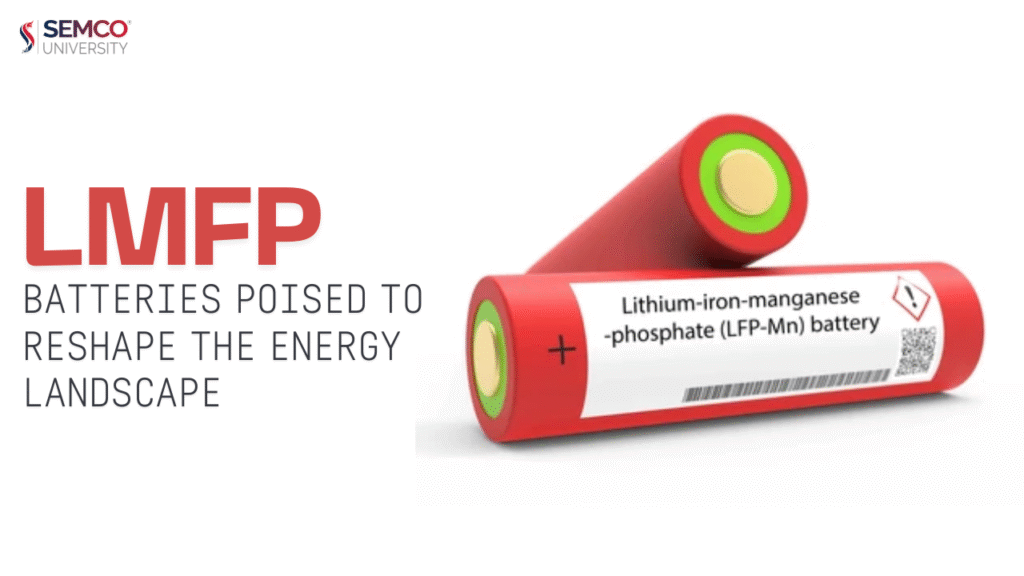
In the dynamic world of new energy vehicles, the relentless pursuit of advanced power battery technology continues to drive innovation. Amidst ongoing debates about the merits of lithium iron phosphate (LFP) versus ternary lithium batteries, a quietly emerging technology is capturing the attention of industry experts: the LMFP batteries. Often hailed as a crucial stepping stone towards the next generation of energy storage, LMFP is gaining traction for its unique blend of advantages, potentially altering the competitive landscape of the battery industry.
1. LMFP: An Evolution, Not a Simple Replacement
Think of the lithium manganese iron phosphate battery as a sophisticated upgrade to the well-established lithium iron phosphate technology. By introducing a specific proportion of manganese into the positive electrode material of traditional LFP, a new compound – lithium manganese iron phosphate – is formed. This seemingly subtle alteration unlocks a significant leap in performance:
- Boosting Energy Density: The inclusion of manganese elevates the operational voltage compared to standard LFP, directly translating to the ability to store more energy within the same volume. This enhanced energy density brings LMFP closer to the performance levels of some ternary lithium batteries, offering a longer driving range for electric vehicles.
- Maintaining Uncompromising Safety: Crucially, LMFP retains the inherent safety advantages of its LFP foundation. Its robust olivine crystal structure provides exceptional thermal stability, making it highly resistant to thermal runaway, even in challenging conditions like puncture or overcharging. This safety profile surpasses that of many ternary lithium chemistries.

- Continuing the Cost Advantage: Manganese is an abundant and relatively inexpensive resource. This inherent cost-effectiveness translates to a lower material cost for LMFP compared to ternary lithium batteries, which rely on more expensive and supply-constrained metals like cobalt and nickel.
- Addressing the Trade-Off: The introduction of manganese does come with a challenge. It can slightly reduce the material’s electrical conductivity and slow down the movement of lithium ions within the battery. This can impact the battery’s ability to deliver power quickly (rate performance) and its performance in cold temperatures. Overcoming this limitation is a key focus of ongoing technical advancements.
2. The Journey to Commercialization: From Lab to Road
The path from laboratory innovation to mass-produced reality for LMFP batteries has seen significant progress:
- Overcoming Production Hurdles: Early challenges related to manganese dissolution and limited lifespan hindered the widespread adoption of LMFP. However, recent breakthroughs in nanotechnology (reducing material particle size), carbon coating (enhancing conductivity), and ion doping (stabilizing the material structure) have dramatically improved its cycle life, now approaching the robust performance of LFP. Leading battery giants have announced successful pilot production, signaling the imminent arrival of mass-produced LMFP batteries.
- Early Market Adoption: LMFP is making its initial forays into the market, with two-wheeled electric vehicles leading the charge. Several brands are now offering models powered by LMFP batteries, emphasizing their “long range plus safety” proposition.

- Passenger Vehicle Trials: The automotive sector is also gearing up for LMFP integration. Several upcoming passenger car models from established and emerging brands are anticipated to feature LMFP batteries, highlighting their potential in mainstream electric vehicles.
- Emerging in Energy Storage: Beyond transportation, LMFP is being actively explored for energy storage applications. Its low cost and long lifespan make it an attractive solution for stationary energy storage systems, particularly for applications requiring extended durations.
3. The Future Battleground: Can LMFP Reshape the Existing Order?
LMFP batteries are not necessarily positioned to completely displace either LFP or ternary lithium, but rather to carve out significant new market segments by offering a compelling middle ground:
- Targeting the Mid-to-Lower Range: In electric vehicles with a target range of under 500 kilometers, LMFP’s combination of enhanced safety and lower cost could make it a preferred alternative to many mid- and lower-tier ternary lithium batteries.
- Creating Hybrid Solutions: Innovative approaches involving the combined use of LMFP and LFP materials are also emerging. These “hybrid” batteries aim to balance both energy density and cost-effectiveness, making them suitable for a broad spectrum of mainstream vehicle models.

- Capturing the Energy Storage Opportunity: The energy storage sector, often less sensitive to ultra-high energy density requirements, presents a significant opportunity for LMFP. Its low cost and long cycle life make it highly competitive in this rapidly expanding market.
- Addressing Key Challenges: Despite its promise, LMFP faces certain hurdles. Its performance can decline noticeably in very cold temperatures, requiring advancements in electrolyte technology or sophisticated thermal management systems. Additionally, early core patents held by international companies present a potential barrier for new manufacturers. Finally, while manganese ore is globally abundant, the processing capacity for battery-grade manganese is currently concentrated, potentially leading to supply chain competition.
4. The Players: Contenders in the Manganese Arena
Several key players are actively developing and promoting LMFP technology:
- Leading Battery Manufacturers: Major companies have unveiled their LMFP battery technologies, boasting significant improvements in energy density.
- Automotive Pioneers: Electric vehicle manufacturers are actively developing and planning to integrate LMFP batteries into their upcoming models, particularly for more cost-sensitive segments.
- Emerging Innovators: Start-up companies focused on advanced nanomaterials for LMFP are attracting significant investment, highlighting the potential of this technology.
The Verdict:
Lithium manganese iron phosphate batteries are not positioned as a direct replacement for either lithium iron phosphate or ternary lithium. Instead, they are poised to unlock new market opportunities by offering a compelling balance of enhanced performance, robust safety, and cost-effectiveness. Driven by the dual demands of cost reduction and efficiency improvements in new energy vehicles, coupled with the burgeoning energy storage market, LMFP is anticipated to reach a significant commercialization point. This “manganese” fueled advancement in power battery technology has the potential to reshape the value chain of the global lithium battery industry.