


As the world accelerates towards electrification, lithium-ion batteries stand as the cornerstone of this transformation. Their formidable advantages—high energy density, extended cycle life, and high operating voltage—have enabled them to dominate markets ranging from power vehicles to consumer electronics. Yet, the diverse array of modern applications demands batteries optimized for specific traits: ultra-high specific energy, immense power output, paramount safety, robust performance at ultra-low temperatures, remarkable longevity, and rapid charging capabilities. Among these, high-power lithium-ion batteries have carved out a significant niche, finding widespread application in demanding sectors such as power tools, automotive start-stop systems, and rail transportation, owing to their exceptional power density.
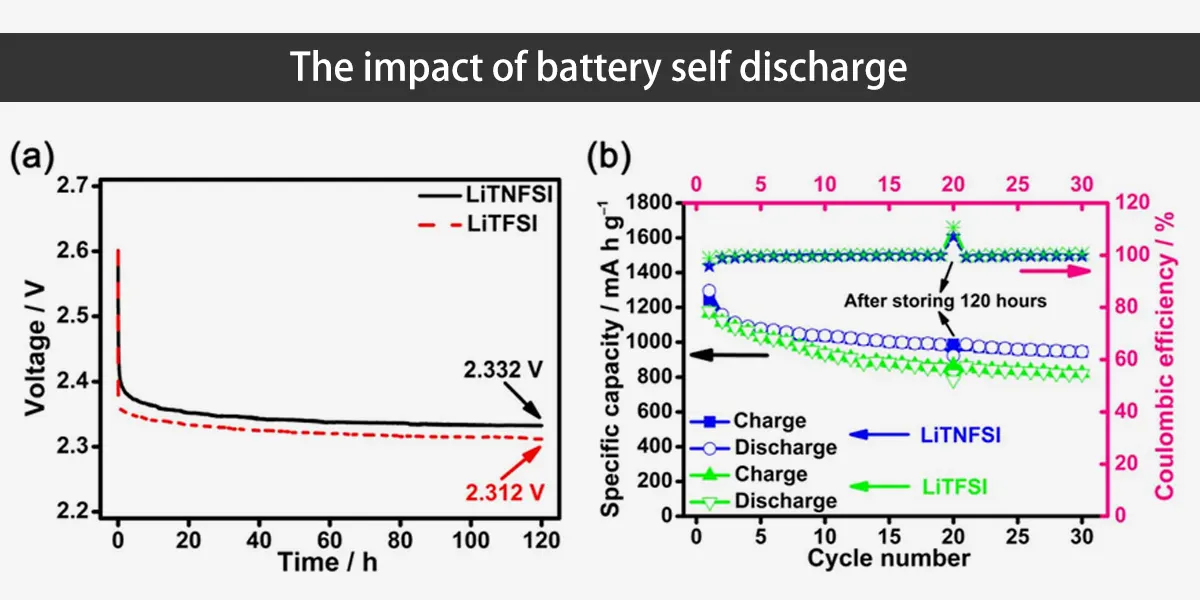
However, extracting the full potential from these advanced energy storage systems presents a critical challenge: cell inconsistency. To achieve the necessary voltage and current outputs, individual battery cells are typically interconnected in series or parallel configurations to form battery packs. When operating, these cells are simultaneously charged and discharged. Any inherent inconsistencies between individual cells can drastically curtail the overall working life of the entire battery system. High-power batteries, in particular, exacerbate these challenges due to their inherent characteristics, such as higher self-discharge rates and the capacity for large discharge currents. Subtle initial inconsistencies in internal resistance and self-discharge rates are amplified within high-power battery packs, leading to accelerated degradation of weaker cells and premature system failure.
Furthermore, high-power batteries frequently employ active materials with high specific surface areas, which, while beneficial for power delivery, often lead to a greater propensity for undesirable side reactions within the battery. This complexity makes accurate pre-grouping screening significantly more challenging than for conventional lithium-ion batteries; simply replicating standard screening protocols proves insufficient.
This paper addresses this critical need by detailing a novel and optimized screening process specifically for high-power lithium iron phosphate (LFP) batteries. Our research employs a safer lower state of charge (SOC) aging storage method and leverages a differential pressure method to assess the detection rate of anomalous self-discharge batteries (termed “self-discharge batteries” hereafter) under various aging and screening conditions. Simultaneously, we integrate high-rate pulse discharge testing to measure the battery’s DC internal resistance, a technique that also proves instrumental in accelerating the identification of hidden self-discharge issues.
1. Experimental Design: Crafting and Probing High-Power LFP Cells
The foundation of our investigation involved the meticulous preparation of experimental batteries and the establishment of rigorous aging and screening protocols designed to expose subtle inconsistencies.
1.1 Battery Preparation: A 20Ah LFP Testbed
The experimental batteries, each with a nominal capacity of 20 Ah, were constructed using state-of-the-art manufacturing techniques.
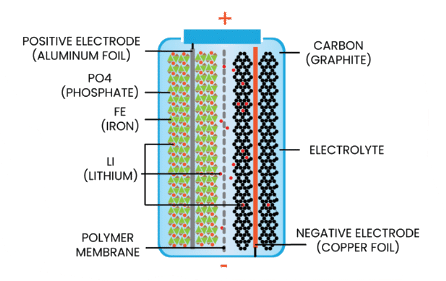
- Positive Electrode: Lithium iron phosphate (LiFePO4) powder, a conductive agent, and a binder were precisely mixed in a homogenizer using N-methylpyrrolidone (NMP) as the solvent. This homogeneous slurry was then evenly coated onto an aluminum foil collector via an extrusion coater and subsequently dried to form the positive electrode sheet.
- Negative Electrode: Graphite powder, a conductive agent, and a binder were similarly mixed in a homogenizer, but this time using water as the solvent. This aqueous slurry was then uniformly coated onto a copper foil collector using an extrusion coater and dried, yielding the negative electrode sheet.
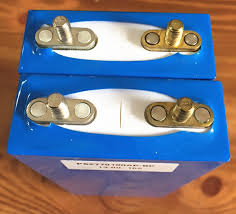
The prepared positive and negative electrode sheets were then precisely punched and stacked with polyolefin separators to form a “pole group” (electrode stack). These pole groups were then subjected to standard assembly procedures, including welding, drying, electrolyte injection, and initial formation cycles, culminating in the creation of the 20Ah experimental batteries ready for testing.
1.2 Aging and Screening System: Unmasking Hidden Flaws
The core of our study revolved around a systematic aging and screening regime designed to identify self-discharge and internal resistance anomalies.
1.2.1 Aging Conditions of Different Experimental Schemes
To evaluate the effectiveness of various aging conditions, experimental batteries were divided into groups and subjected to different aging and open circuit voltage (OCV) test conditions. A key safety consideration for the aging shelf was to maintain the SOC at not higher than 30% (achieved by controlling the charging capacity after initial formation). The total shelving time for all aging schemes was 14 days.
The ambient temperature during shelving was carefully controlled:
- Normal Temperature Shelf: (25±3)∘C
- High Temperature Shelf: (45±3)∘C
After the aging period was completed, batteries underwent post-processing charging and discharging to prepare them for detailed analysis. OCV and AC internal resistance measurements were consistently performed using a HIOKI 3561 internal resistance tester.
1.2.2 Secondary Screening Conditions After Aging Treatment
The final step of the battery aging post-treatment for all four experimental schemes involved charging the battery to 50% SOC. Following this, the four groups of aged batteries were subjected to a high-rate pulse discharge test using Decalong battery test equipment. The discharge protocol was a 30C current pulse (current recorded as I) applied for 5 seconds. During this pulse, the discharge start voltage (U1) and discharge end voltage (U2) were meticulously recorded. The DC internal resistance (Rdirect) was then precisely calculated using the formula: Rdirect=(U1−U2)/I.
Immediately after this pulse discharge, another OCV test was performed at 30% SOC, and a crucial parameter, the K value, was calculated.
1.2.3 Self-Discharging Battery Determination: The 3σ Criterion
To quantitatively identify self-discharging batteries, the K value was defined as the rate of change of OCV over time: K=ΔOCV/Δt. The standard for determining self-discharge batteries relied on the “3$\sigma$ criterion” of normal distribution. According to this criterion, batteries with K values greater than (μ+3σ) were classified as self-discharge batteries, where μ represents the mean value of the K value, and σ is the standard deviation of the K value. It is important to note that significantly anomalous data points for K value were removed before calculating μ and σ to ensure robust statistical analysis.
To establish a definitive benchmark for missed and wrong screenings, a long-term reference was created. The OCV of all batteries was measured again after being shelved for 6 months, and their K values were calculated. Batteries identified as self-discharging using the “3σ rule” after this 6-month shelving period were used as the ground truth.
- A missed screening battery for a given screening scheme was defined as a battery that was deemed self-discharged by its 6-month K value but was not identified as self-discharged in the current screening.
- A wrong screening battery for a given screening scheme was defined as a battery that was not deemed self-discharged by its 6-month K value but was erroneously identified as self-discharged in the current screening.
2. Results and Discussion: Efficacy of Screening Strategies
Our detailed analysis of the experimental data sheds light on the effectiveness, or lack thereof, of different screening strategies for high-power LFP batteries.
2.1 Self-Discharge Screening During the Initial Aging Period
Figure 1 (parts a-d, representing different experimental schemes) illustrates the distribution of K values during the initial aging period’s self-discharge screening. Batteries marked in red indicate missed self-discharge batteries, while those in green represent self-discharge batteries with abnormally high K values, all judged against the 6-month shelving data benchmark.
- Scheme 1 (Normal Temperature Aging): Figure 1(a) shows that 5 self-discharge batteries were identified, but 3 self-discharge batteries were still missed in this initial round.
- Scheme 2 (Partial High-Temperature Aging): In Scheme 2 (Figure 1(b)), where 3 days of normal temperature aging were replaced with 3 days of high-temperature aging, the overall K values were slightly larger than in Scheme 1. This suggests that high-temperature conditions indeed induce a greater battery voltage drop. However, despite this accelerated degradation, 4 self-discharge batteries were screened out, but 3 still remained undetected.
- Scheme 3 (Lower SOC Aging): Figure 1(c) presents the K value distribution for Scheme 3. Compared to Scheme 2, the aging SOC was deliberately set lower (e.g., 8% SOC). This resulted in a more significant voltage change in this specific SOC interval, leading to generally larger K values across the board. While 3 self-discharge batteries were identified, 3 were still missed. Critically, this scheme also mistakenly identified one good battery as a self-discharge battery (a wrong screening). This particular result highlights a crucial insight: simply inducing more significant voltage changes (larger K values) is not the sole key to ensuring 100% accurate screening of self-discharge batteries.
- Scheme 4 (Two-Round Initial Screening): Figure 1(d) shows the results for Scheme 4, which involved two rounds of screening during the aging period. Only 2 self-discharge batteries were identified in the first screening, leaving a substantial 5 undetected. The second screening identified an additional self-discharge battery, but 4 still remained unscreened.
The cumulative statistics from this initial aging period, presented conceptually in Table 2, clearly underscore a major limitation: all four schemes, even with adjustments to storage temperature and reduction of storage SOC, failed to completely screen out self-discharging batteries. The missed screening ratio ranged significantly from 37.50% to 57.14%, indicating that these primary aging methods could only reliably identify batteries with the most severe self-discharge anomalies, leaving a significant proportion of problematic cells undetected.
2.2 Capacity Retention and Recovery Rates Before and After Aging
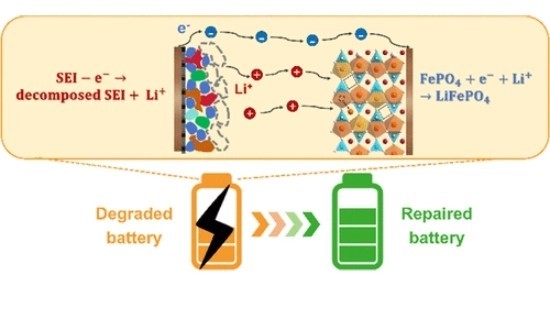
Understanding the nature of self-discharge is critical for effective screening. Lithium battery self-discharge is broadly categorized into physical self-discharge (often related to microscopic internal shorts) and chemical self-discharge (due to side reactions, typically irreversible). Chemical self-discharge is more prevalent in the early stages of battery life and tends to stabilize once the battery matures. Therefore, standard self-discharge screening primarily aims to identify physical self-discharge batteries.
Figure 2 illustrates the capacity recovery rate of batteries across the different experimental schemes. It was estimated that the irreversible capacity loss (attributable to chemical self-discharge) for all four schemes ranged from approximately 1.5% to 3%. Scheme 2, which combined high temperature, high SOC, and a long standing time, exhibited the lowest capacity recovery rate, implying a greater extent of irreversible chemical self-discharge. Conversely, Scheme 3, with its very low aging SOC (8%), showed the highest capacity recovery rate, suggesting that internal side reactions might not have been fully completed. This observation leads to an important inference: excessive chemical self-discharge can potentially mask the physical self-discharge in these schemes, thereby hindering the accurate screening of physical self-discharge batteries.
Furthermore, as shown in Figure 3, the capacity retention rates during the aging period for all four schemes were relatively low, with an average value less than 91%. Scheme 2, which had the lowest capacity recovery rate, also displayed the lowest capacity retention rate. The reasons for these consistently low retention rates are twofold:
- High Activity of High-Power Batteries: High-power batteries inherently possess higher electrochemical activity, contributing to a faster overall self-discharge process.
- Significant Chemical Self-Discharge: The larger extent of chemical self-discharge observed in these batteries further contributes to the observed capacity loss during aging.
2.3 Secondary Self-Discharge Screening with High-Rate Pulse Discharge
The limitations of initial aging-based screening necessitated a more aggressive approach. Figure 4 presents the distribution of K values after incorporating the high-rate pulse discharge as a secondary screening step.
Remarkably, after this secondary screening, Scheme 1, Scheme 2, and Scheme 4 exhibited zero missed screenings, effectively identifying all target self-discharge batteries. While a small amount of “wrong screening” (misidentifying a good battery as self-discharging) still occurred, such errors are generally considered acceptable in industrial settings as they only slightly reduce the battery utilization rate without allowing defective products to enter a module. These results strongly suggest that combining existing room temperature aging with a subsequent high-rate pulse discharge is a highly effective method for screening out self-discharge batteries.
The efficacy of high-rate pulse discharge can be attributed to its ability to induce hidden problems. The rapid current shock is conducive to triggering dormant microscopic defects into detectable micro-short-circuits, thereby significantly accelerating their identification.
However, Scheme 3 still presented a challenge, with 2 missed screening batteries even after the secondary pulse discharge. A re-test of the capacity for batteries in Scheme 3 revealed an average capacity retention rate of 98.8%, which was notably lower than the approximately 99.6% retention rate observed in the other schemes. This anomaly in Scheme 3 is likely due to its unique low-SOC aging condition. In this low SOC state, the internal side reactions of the battery might not have fully run to completion or might have developed differently, which subsequently impacted the effectiveness of self-discharge screening even with the high-rate pulse.
Therefore, the most potent screening strategy appears to be a combination of high-SOC aging followed by a high-rate pulse discharge. This combined approach effectively addresses both the inherent characteristics of high-power LFP batteries and their potential latent defects, leading to superior screening accuracy for self-discharge issues.
Conclusion: Refining the Art of high-power lithium-ion Battery Selection
The accurate and reliable screening of high-power lithium-ion battery cells before their integration into battery packs is not merely a quality control step; it is a fundamental requirement for ensuring the long-term performance, safety, and economic viability of energy storage systems. Our comprehensive study on high-power LFP batteries provides critical insights into optimizing this screening process.
We have demonstrated that traditional aging-based screening methods, even with variations in temperature and SOC, are insufficient on their own to reliably detect all self-discharge anomalies, with significant missed screening rates observed. The inherent activity and the prevalence of chemical self-discharge in high-power LFP batteries further complicate these initial screening efforts.
Crucially, our research highlights the transformative role of high-rate pulse discharge as a secondary screening step. This aggressive yet controlled method proves highly effective in unmasking hidden micro-short-circuits, accelerating the detection of potentially problematic cells that would otherwise slip through initial screening nets. While the aging SOC plays a nuanced role, our findings suggest that a combination of aging at higher SOCs followed by the high-rate pulse discharge offers the most robust strategy for comprehensively identifying self-discharge batteries.
By implementing these refined screening protocols, battery manufacturers can significantly improve the consistency of their high-power battery packs, leading to enhanced overall system life, superior reliability, and ultimately, greater confidence in the performance of advanced electrochemical energy storage devices. This work provides a tangible blueprint for optimizing manufacturing processes and ensuring the sustained growth of high-power battery applications across diverse industries.