


The quest for higher energy density and extended cycle life in lithium-ion batteries has propelled the development of sophisticated lithium replenishment technologies. These innovations aim to counteract the inevitable lithium loss that occurs during initial battery cycling and subsequent operation, thereby unlocking the full potential of advanced electrode materials. This article delves into the specific materials and diverse methodologies employed for both negative and positive electrode lithium replenishment, highlighting their unique advantages and the challenges that continue to drive ongoing research.
Part I: Negative Electrode Lithium Replenishment: Addressing Initial Loss
Negative electrode lithium replenishment primarily focuses on compensating for the irreversible lithium consumption that occurs during the formation of the Solid Electrolyte Interphase (SEI) film and other parasitic reactions. Various strategies have been developed to introduce the necessary additional lithium:
1. Lithium Foil Replenishment (Self-Discharge Mechanism)
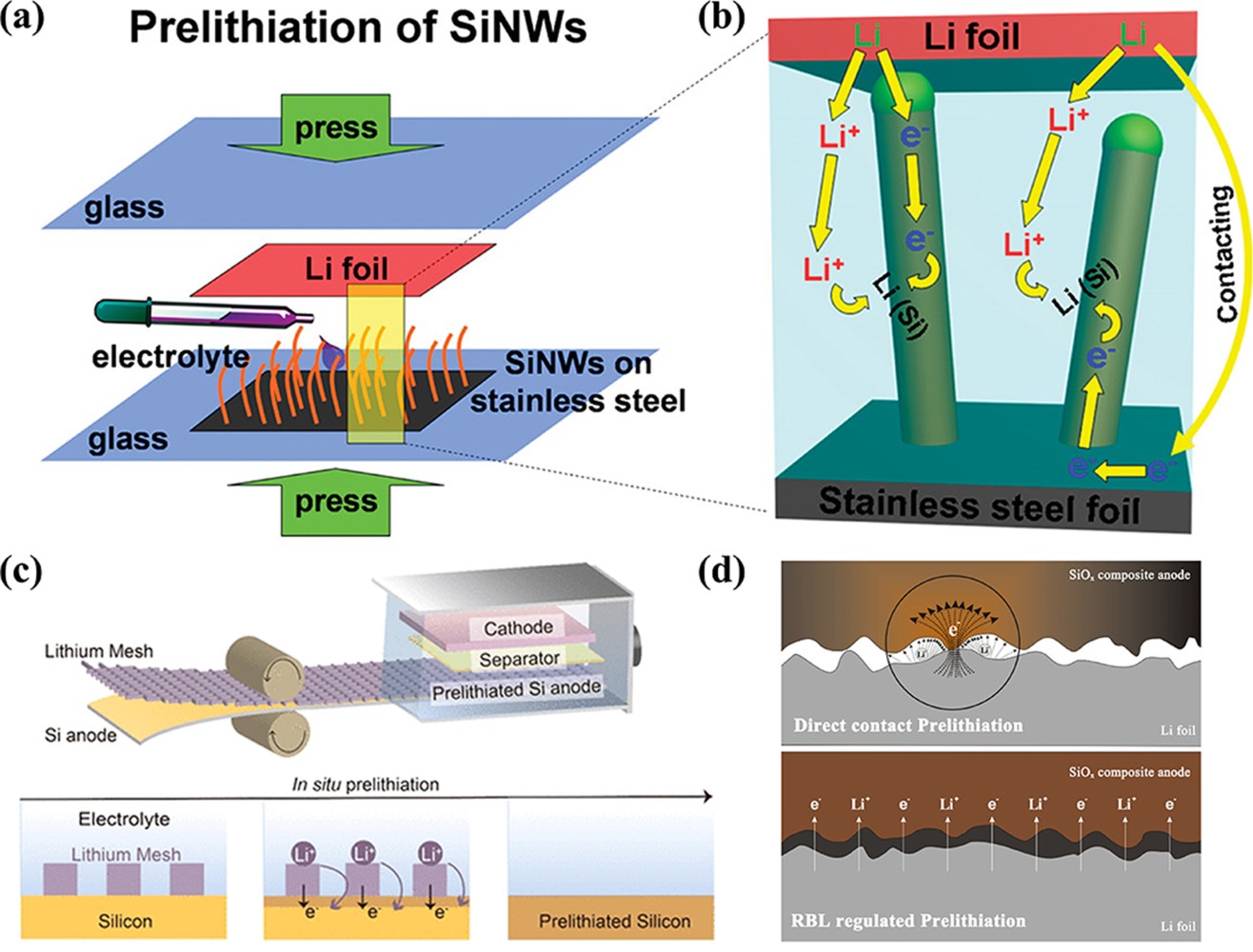
This method leverages the fundamental electrochemical principle that metallic lithium possesses the lowest potential among all electrode materials. When a negative electrode material is brought into direct contact with metallic lithium foil within an electrolyte, the inherent potential difference drives electrons spontaneously from the metallic lithium to the negative electrode. Simultaneously, lithium ions (Li+) are embedded into the negative electrode, effectively achieving lithium replenishment.
Research examples demonstrate the efficacy of this approach:
- Upon direct contact with lithium metal foil after electrolyte is dripped onto silicon nanowire negative electrodes grown on a stainless-steel substrate, the open circuit voltage of the silicon nanowire notably drops from 1.55 V to 0.25 V, and the first lithium insertion specific capacity changes from 3800 mAh/g to 1600 mAh/g.
- Similarly, after a tin-carbon negative electrode is directly contacted with lithium foil soaked in electrolyte for 180 min, its irreversible specific capacity significantly decreases from 680 mAh/g to 65 mAh/g.
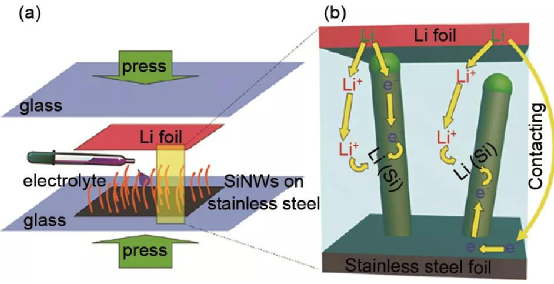
However, a key challenge with this method is the difficulty in precisely controlling the degree of pre-lithiation. Insufficient lithiation may not fully improve the first-cycle coulombic efficiency, while excessive lithium replenishment risks forming an undesirable metallic lithium plating layer on the negative electrode surface, which can adversely affect battery performance and safety. To enhance safety and processability, some researchers have ingeniously designed a three-layer negative electrode structure comprising an active material layer, a polymer protective layer, and a lithium metal layer. In this design, a metallic lithium layer is electrochemically deposited onto a copper foil, subsequently coated with a protective polymer layer (e.g., polymethylmethacrylate), and finally covered with the active material. This layered structure can exhibit stability in ambient air for periods of 30−60 minutes, significantly simplifying negative electrode processing.
2. Stabilized Lithium Metal Powder (SLMP)
Stabilized Lithium Metal Powder (SLMP) is a groundbreaking material offering exceptionally high specific capacity, often reaching up to 3600 mAh/g. Its surface is engineered with a thin, passivating layer (typically 2%−5% lithium carbonate), which renders it stable enough for handling in dry environments.
There are two primary ways to incorporate SLMP for negative electrode pre-lithiation:
- Adding it directly during the electrode slurry mixing process.
- Applying it directly to the surface of the negative electrode sheet.
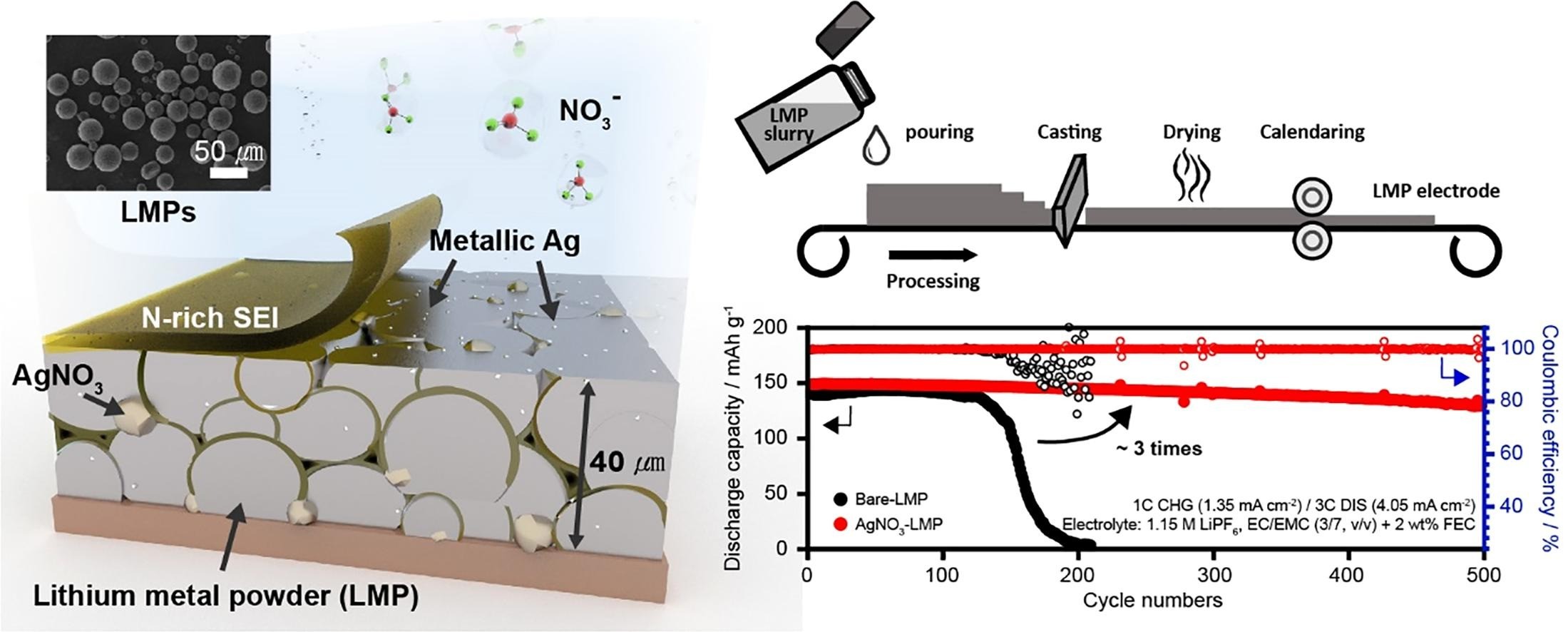
A significant consideration for SLMP application is its incompatibility with polar solvents commonly found in conventional negative electrode slurry systems (e.g., PVDF/NMP or SBR+CMC/deionized water). Consequently, SLMP typically requires dispersion in non-polar solvents like hexane and toluene. For example, when SLMP is directly mixed into a graphite electrode slurry using an SBR-PVDF/toluene system, the first coulombic efficiency (ICE) of the resulting battery can increase from approximately 90.6% to 96.2% under specific cycling conditions. Furthermore, research involving the direct application of a 3% mass fraction SLMP/toluene solution onto the surface of silicon-carbon nanotube negative electrodes, followed by solvent evaporation, pressing, and activation, has demonstrated a 20%−40% reduction in the negative electrode’s initial irreversible capacity after pre-lithiation.
3. Lithium Silicide Powder
Nano-lithium silicide powder presents another promising avenue for negative electrode lithium replenishment. Its small particle size facilitates excellent dispersion within the negative electrode structure. Crucially, as lithium silicide is already in an expanded state, the volume changes it undergoes during subsequent battery cycling have a less significant impact on the overall electrode structure, which is beneficial for stability.
While research into lithium silicide powder as a lithium supplement additive is still relatively emerging, existing studies show compelling results. For instance, in a half-cell system, adding 15% lithium silicide powder increased the ICE of a silicon negative electrode from 76% to 94%. Similarly, incorporating 9% lithium silicide powder boosted the ICE of mesophase carbon microspheres from 75% to 99%, and 7% lithium silicide powder increased the ICE of a graphite negative electrode from 87% to 99%.
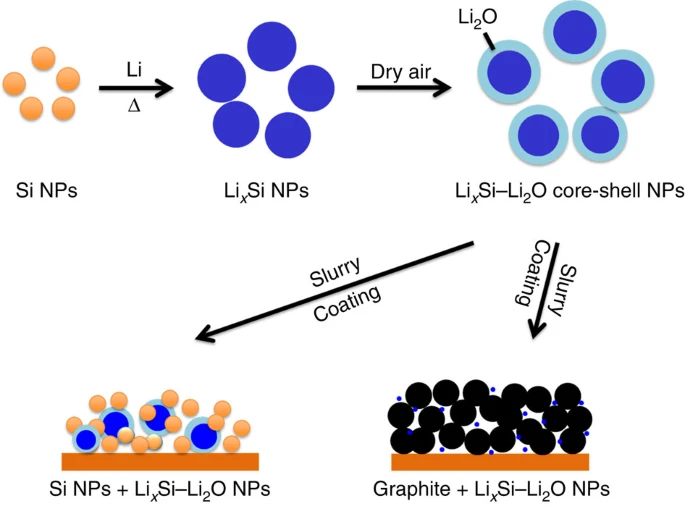
However, the practical application of lithium silicide powder still faces challenges, including ensuring its compatibility with other battery materials and addressing the cost and process complexities associated with its large-scale preparation. These aspects require continued research and development efforts.
Part II: Positive Electrode Lithium Replenishment Materials: A Complementary Strategy
Positive electrode lithium replenishment offers a complementary approach to counteract lithium loss, primarily through electrochemical mechanisms. This involves incorporating specific lithium replenishment materials into the positive electrode during manufacturing. During the battery’s initial charging process, these materials are designed to decompose and release active lithium, directly compensating for the irreversible active lithium loss on the negative electrode (e.g., from SEI film growth).
1. Lithium-Rich Compounds
Certain lithium-rich compounds are excellent candidates for positive electrode lithium replenishment. For instance, studies on materials like Li1+xNi0.5Mn1.5O4 demonstrate their effectiveness in compensating for irreversible capacity loss in full battery systems. When used in a mixed positive electrode (containing Li1+xNi0.5Mn1.5O4), a battery can exhibit a capacity retention rate of 75% after 100 cycles, significantly outperforming batteries using a pure cathode, which might retain only 51% capacity under similar conditions.
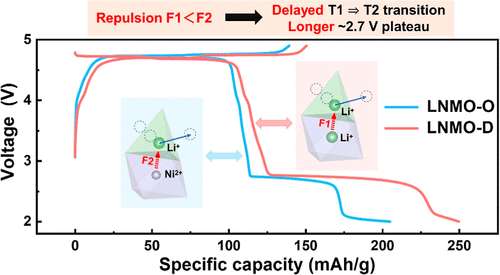
Another lithium-rich compound, Li2NiO2, also holds promise for positive electrode lithium supplementation. However, it faces challenges due to its poor stability in ambient air, where it readily reacts with air components, leading to structural instability. Furthermore, at high potentials, it can react with the electrolyte, adversely affecting the battery’s cycle and rate performance. To overcome these limitations, researchers have successfully modified Li2NiO2 with substances like aluminum isopropoxide. The resulting alumina-coated Li2NiO2 material exhibits significantly improved air stability and a superior lithium supplementation effect.
2. Nanocomposites Based on Transformation Reactions
Nanocomposites based on transformation reactions offer a unique mechanism for positive electrode lithium replenishment. Characterized by a large charge/discharge voltage hysteresis, these materials can contribute a substantial amount of lithium during the battery’s first charge. However, crucially, the lithium insertion reaction does not occur significantly during the subsequent discharge process, ensuring a net lithium contribution.
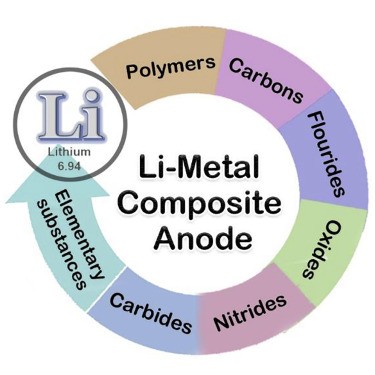
Researchers have explored the performance of M/lithium oxide, M/lithium fluoride, and M/lithium sulfide nanocomposites (where M = Co, Ni, and Fe) as positive electrode lithium supplement additives. For example, a synthesized nano Co/lithium oxide composite material demonstrated a first charge specific capacity of 619 mAh/g when cycled at 50 mA/g. Despite a low discharge specific capacity (e.g., 10 mAh/g), it exhibited good environmental stability, retaining a high percentage of its initial lithium removal specific capacity even after prolonged air exposure. This compatibility with commercial battery production processes makes them attractive. While lithium fluoride is another potential positive electrode lithium supplement material due to its high lithium content and good stability, its extremely low electrical and ionic conductivity remains a significant hurdle that necessitates specialized preparation processes or composite formations with other materials.
3. Binary Lithium Compounds
Binary lithium compounds, such as Li2O and Li2O2, possess exceptionally high theoretical specific capacities (e.g., Li2O2 reaching 1168 mAh/g). However, their practical application is often complicated by issues like poor conductivity and the potential for metal dissolution at high potentials, which can negatively impact battery cell performance.
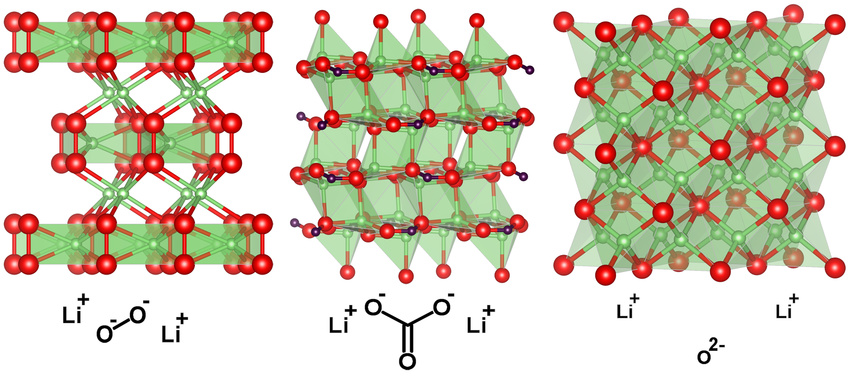
To mitigate these problems, innovative approaches have been developed. For instance, research has led to the preparation of rGO@Li2O/Co nanocomposites based on conversion reactions, where Li2O/Co nanoparticles are anchored to the surface of graphene to enhance conductivity. Other strategies involve coating lithium supplement materials like Li2O and metal M with protective shells (e.g., SiOx and carbon). This coating treatment not only improves the material’s conductivity and metal stability but also reduces dissolution, ensuring full compatibility with existing lithium battery processing and manufacturing technologies.
Conclusion: Pioneering the Next Generation of Batteries
The diverse and continuously evolving landscape of lithium replenishment methods and materials underscores their critical role in advancing lithium-ion battery technology. Both negative electrode and positive electrode lithium replenishment strategies offer distinct advantages and are tailored for specific application scenarios. While negative electrode methods encompass physical mixed lithiation, vacuum winding lithium plating, chemical lithiation, self-discharge mechanism lithiation, and electrochemical lithiation, positive electrode replenishment primarily leverages electrochemical routes through specialized lithium-rich compounds, nanocomposites, and binary lithium compounds.
Each material and methodology, from lithium foil and stabilized lithium metal powder to various lithium silicide and lithium-rich compounds, presents unique performance benefits. However, they also face common challenges related to material stability, compatibility with other battery components, and cost-effectiveness for large-scale production. Continued dedicated research and development in these areas are paramount to overcoming these hurdles, ultimately paving the way for the widespread deployment of higher-performance, longer-lasting, and more robust lithium-ion batteries that are essential for the future of energy.